
Sources for Denver Previous Residents
A one-address history needs sources that reach different eras. The recorded-document database reaches from 1859 through the present according to the Auditor's audit, but not every image is online. Denver Public Library fills earlier ownership and occupant gaps with assessor material, city directories, householder books, Polk or Criss-Cross volumes, maps and newspaper indexes. State Archives and FamilySearch add early reception, court and probate material.
| Source | Years captured | Where held | What it shows |
|---|---|---|---|
| Clerk and Recorder documents | 1859-present reported online database | CountyFusion and Clerk request route | Reception, deed parties, instruments and image status |
| Denver deed books | 1859-1884 | Denver Public Library | Older grantor/grantee and legal-description continuity |
| Assessor chain material | 1870s-1917 microfilm range | DPL historical collections | Ownership and assessment references before the web portal |
| City directories | 1866-1923 holdings; 1873-1923 digital run | DPL and digital collections | Dated name-to-address snapshots |
| Householder and Criss-Cross | 1924-2018 holdings described | DPL microfilm or library access | Reverse address-to-householder entries |
| Sanborn and related maps | 1887-1951 examples | DPL and Library of Congress | Footprint, lot, use, height and street context |
| Probate files | 1900-1925 digital run; 1900-1946 collection | FamilySearch, State Archives and Probate | Decedent, heirs, representative and document dates |
| General Index and burial leads | 1935-1995 new index entries; local burial runs | DPL Western History | Obituary, notice, mortuary and cemetery citations |
Use the era closest to the question, then bridge forward or backward. A missing directory year is a gap in the publication, not proof that an address had no household.
Begin With Today's Denver Past-Resident Parcel Card
Open the Denver Property Record Search by address or parcel number. Save the Schedule Number, situs address, owner, OwnerFullAddress, legal description, neighborhood, tax district and capture date. The legal description is often the durable bridge when a street number has changed or a common-element parcel sits beside a house.
Do not call the current owner a current resident without a second source. The owner mailing address can sit outside Denver County, and the sample parcel in the research is association-owned common-element land with a Denver situs and Westminster mailing address. The parcel card establishes a current property relationship. It does not list every person connected with the place.
Ownership and occupant trails can diverge. A deed names a recorded party. A tax mailing field names a correspondence destination. A directory names a printed householder. A probate file names a case participant. Mark those roles before looking for previous residents.
Trace Denver Past Residents Through Deeds
The Denver CountyFusion chain begins with the current owner or grantee and moves backward through the prior grantor. The live search supports Names, party type, name options, recorded-date range, document type, document number, book/page, marriage license and historical grantor/grantee index groups. The one-page guest guide says to search the Denver records hub as a guest, accept the disclaimer, enter last name then first name without punctuation, open the reception result and choose Certified Copy when a formal copy is needed.
The Denver CountyFusion certified-copy entry shows the separate copy-access route.
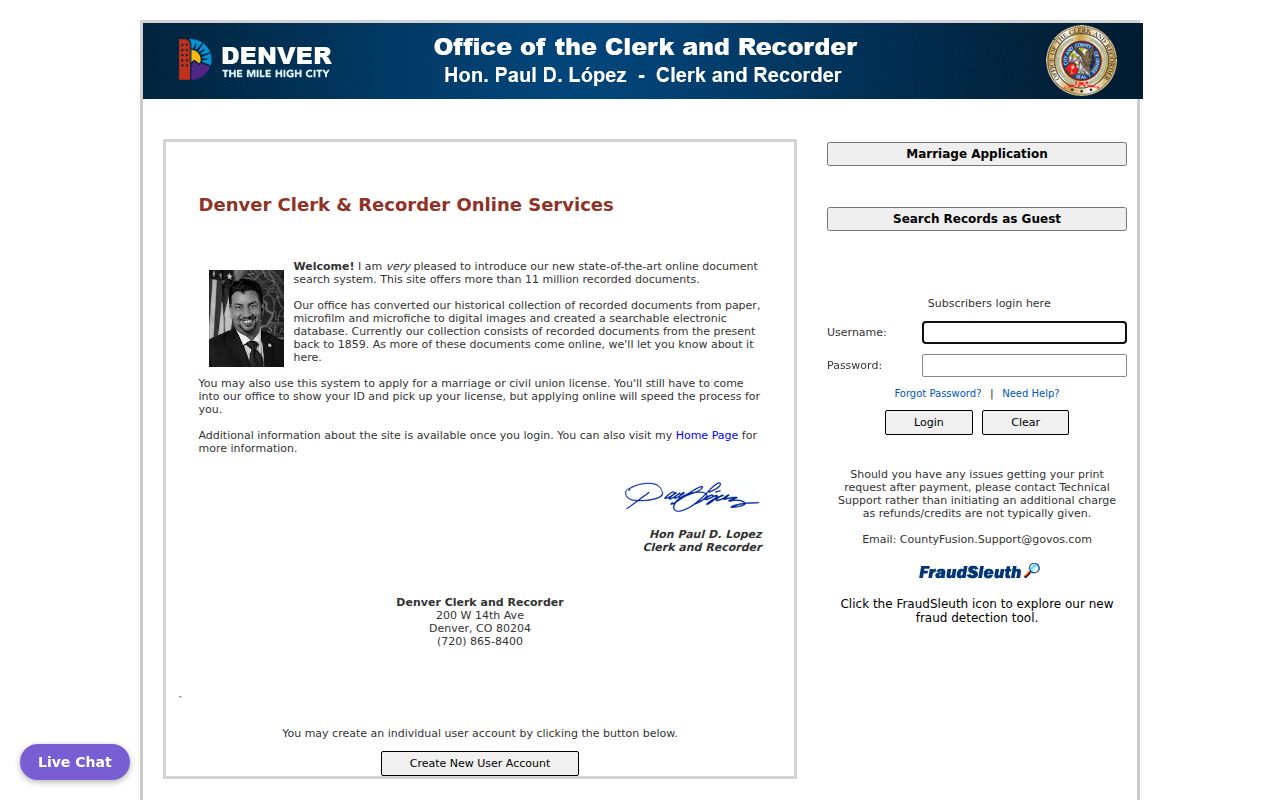
The image belongs at the deed-chain step because a reception number links an index row to a document or request.
- Save today's schedule number, legal description, owner and capture date.
- Search the current owner or grantee and identify deeds, deeds of trust, releases, liens, plats and trustee instruments.
- Match the likely deed by legal description, subdivision, block, lot, parcel and date, not just a street number.
- Take the prior grantor or earlier grantee as the next name, repeating the match backward.
- When the image is missing, use the reception number to request paper retrieval, digitization or a certified copy.
- Grantor
- The party transferring or conveying an interest in a recorded instrument.
- Grantee
- The party receiving an interest in that instrument.
- Chain of title
- A dated sequence of recorded interests linking one parcel back through prior parties.
- Legal description
- The subdivision, block, lot or other parcel wording that can identify land after a street address changes.
When Denver Former Residents Lose Deed Images
The Auditor's records-management audit described a large indexed pipeline, but it also said paper records not yet digitized may be stored at five city locations or with an off-site vendor. CountyFusion can show a reception trail while the underlying image remains unavailable online. That is an access condition, not an ownership gap.
Write to recording@denvergov.org with the reception number when the Clerk's search page directs that route. The Denver Clerk and Recorder's CORA page can handle a more general existing-record request. Requests received after 3 p.m. or after closure are treated as received the next working day. The research and retrieval fee is $41.37 per hour after the first free hour. Ask for an existing instrument or image, not a new custom report.
The full Denver recording records hub connects the search, certified-copy and request paths. Public counter and phone help at 200 W. 14th Ave., 311 or 720-913-1311 are additional routes.
Translate Denver Addresses for Past Residents
Previous residents can disappear from a search because the address string changed. Denver's 1887 decimal street system uses Broadway and Ellsworth as a reference point and describes 100 numbers per block. DPL identifies major downtown numbering work in 1887 and street-name changes in 1897 and 1904.
Use the old and new street name, cross street, block and lot, legal description, map sheet and nearby parties together. The Library of Congress Sanborn guide explains how map fields and building footprints can help resolve the physical place.
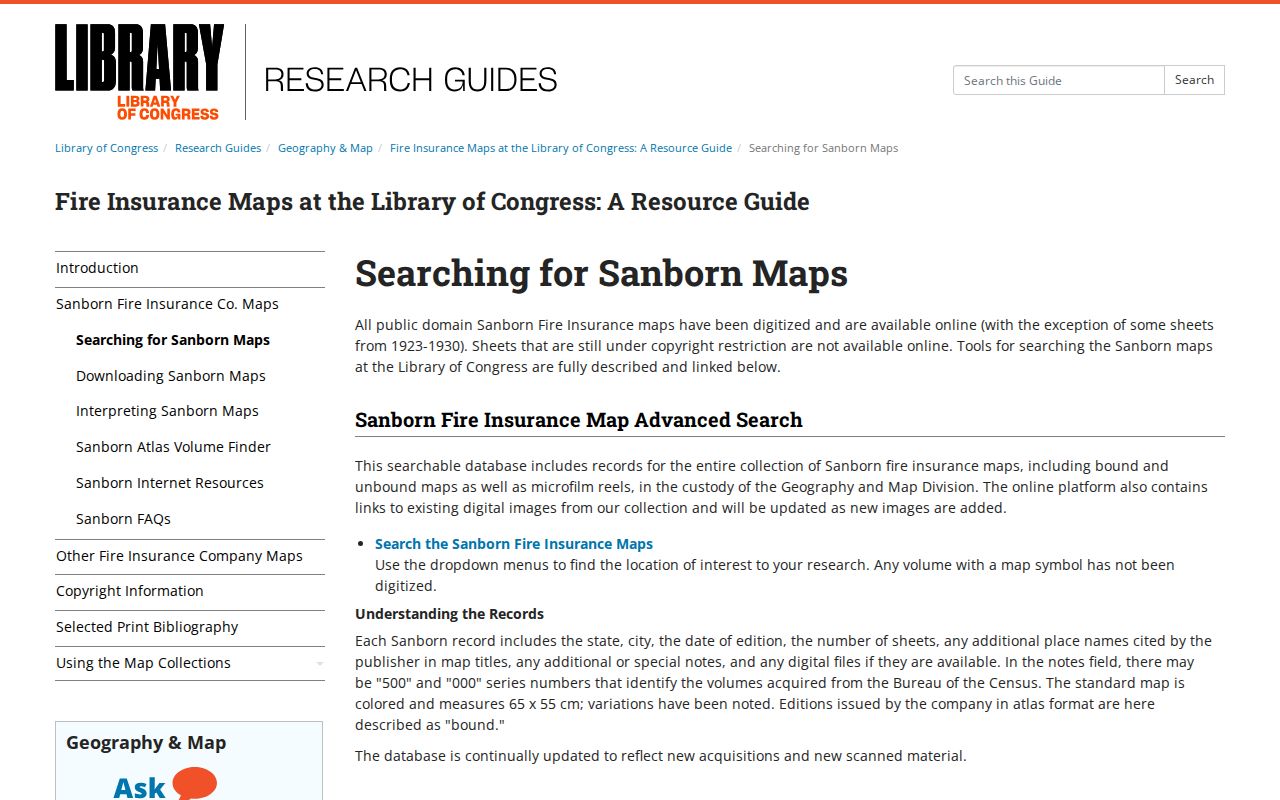
A dated map can connect a printed address to a footprint even when the street number no longer matches.
DPL's house-history material names Sanborn, plat, Robinson, Baist and Real Property Survey resources. Compare footprint, lot line, building use, height and neighboring cross street. Maps explain place continuity; they do not supply a current people list.
Denver Directory Snapshots of Past Residents
Directories supply the occupant layer that a title chain cannot. DPL describes early city directory holdings from 1866-1923, householder directories from 1924-1937 and Polk or Criss-Cross holdings from 1924-2018. Search the surname volume and the address section for the same year. Record the printed name, page, house number, street spelling and any residence or householder mark.
The Colorado Phone Book and Directory Index is a separate name-and-address lead with a search convention that uses *Town for a main town entry. The result is a citation, not a current registration. A library request can bridge a hard-to-read page or a year not available in the digital run.
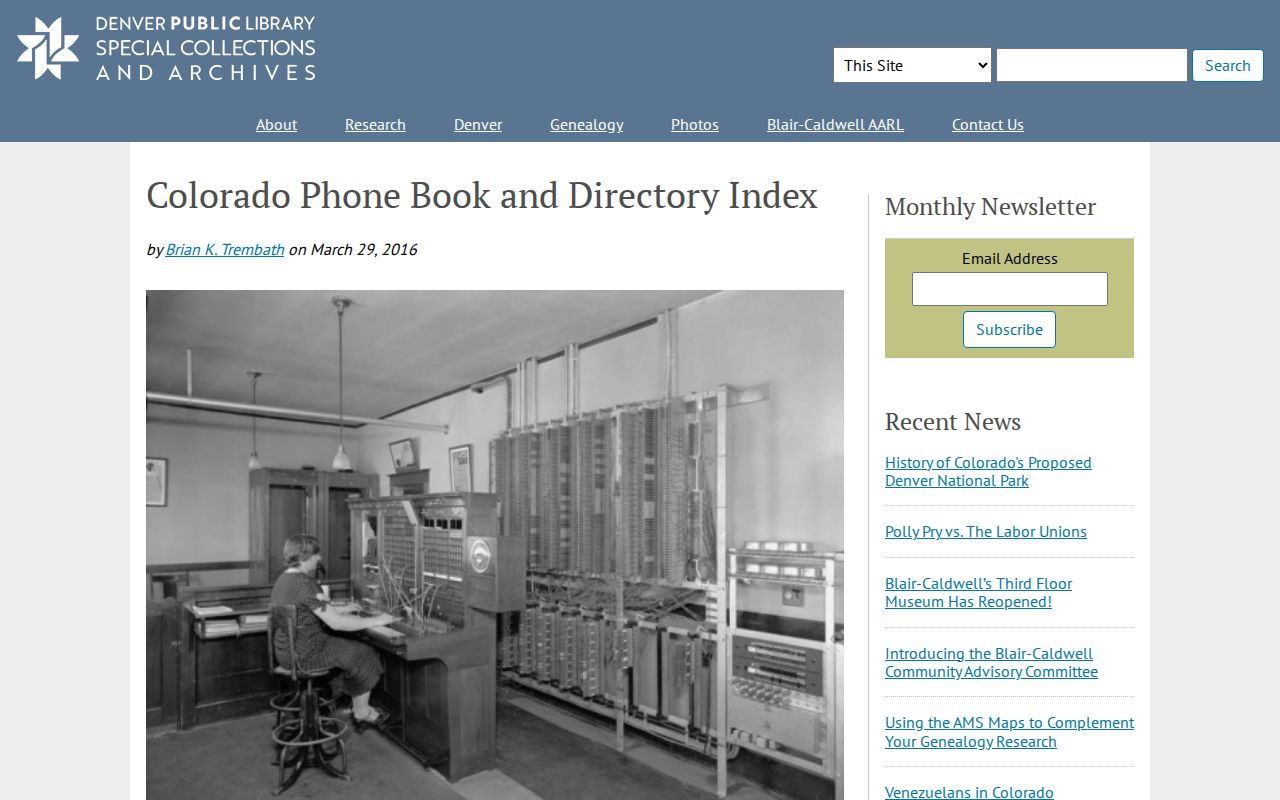
The phone-book index capture illustrates how a historical directory citation can extend a deed trail.
The city directory collections and entry-reading method belong on the Denver city directory page. The previous-resident question uses those collections as dated evidence around one address rather than rebuilding the full shelf.
Denver Obituaries and Probate for Past Residents
The DPL General Index began in 1935, draws on older Rocky Mountain News and Denver Times material, and closed new entries in 1995. Its approximately 6.5 million entries and one million cards can lead to an obituary, marriage notice, court item or civic mention. Preserve the citation, newspaper, page and publication date. A card or digital result is not a certificate.
The Denver General Index capture shows the newspaper route.
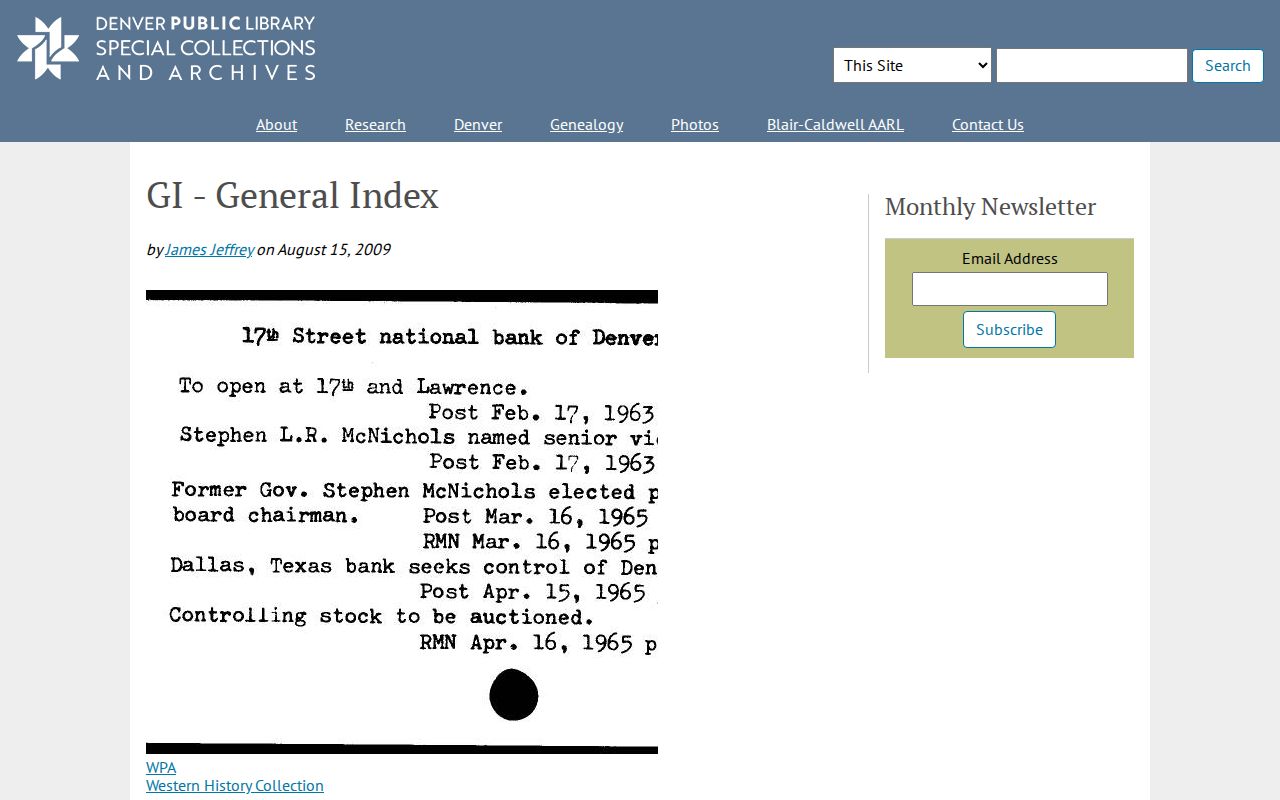
The index image provides a dated lead that can be compared with a directory or deed event.
Probate can add decedent, heirs, representative, guardian, residence and document dates. FamilySearch's Denver probate collection covers a 1900-1925 digital case-file run within a broader 1900-1946 collection. Packets may be restricted, missing or image-only. The Denver Probate clerk handles later files and lists a $5 name search without a case number, $0.25 copies and $20 certification.
The FamilySearch Denver probate collection is a historical image route, not a general resident search.
A probate packet may explain an address change or family link while still requiring custodian rules.
Denver House-History Help for Past Residents
Denver Public Library's house-history guide is a practical fallback when a current portal cannot explain an old address. It directs researchers to directories, reverse directories, Sanborn maps, plats, assessor material, building permits and property resources. The request form can identify a one-house question and ask for legal description, ownership, permits if available, photographs, plans and related material.
History Colorado's Hart Research Center adds archives, photographs, maps, manuscripts, newspapers and artifacts. State Archives finding aids identify Denver and Auraria records from 1858-1859, reception books, grantor and grantee material, elector registers, court ledgers and naturalization files. Recent Colorado library reporting also describes Plains to Peaks discovery work, partner collections, more than 30,000 maps in a catalog and a route for requesting uncataloged maps.
The Denver building-history guide is the best starting point for a focused house-history request.
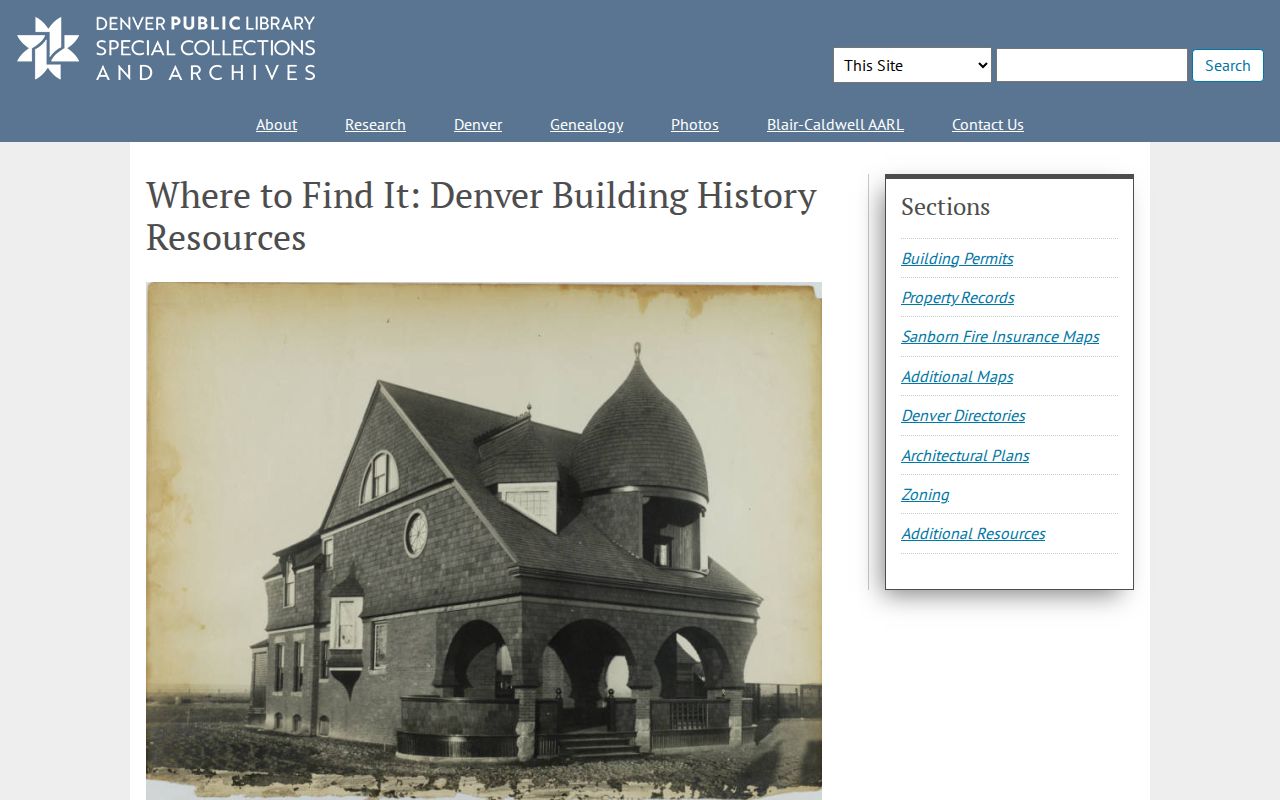
The guide capture shows the library's bridge between printed names, maps, permits and parcel material.
Mapping Prejudice is another historical reading aid. DPL describes a 2022 grant-backed review of roughly 144,000 Denver land records from 1931-1935 that mapped more than 300 explicit racist deeds. That project belongs in place history and critical reading, not in a current person claim.
A Denver Past-Resident Trail Has Limits
The strongest previous residents result is a dated evidence chain: parcel card, recorded instruments, historical assessor or deed books, directory snapshots, map or street-number translation, newspaper lead, and probate or cemetery context. The chain can explain how a place and its records connect. It cannot prove every household member, every occupant or every person who received mail.
Keep current title, mailing recipient, printed householder, probate participant and historical resident as separate labels. If a name is common, require a second signal such as a legal description, map footprint, reception number, page citation or case date. When a record is confidential or missing, use the official request route instead of filling the gap with an inference.
Lawful house history. Research into previous residents is appropriate for family history, preservation, genealogy and personal curiosity. Do not use an address trail to stalk, harass, intimidate or harm a living person.
The safest access chain is online index, public counter, direct phone, mail or email request, Denver Public Library or State Archives, then CORA for an existing eligible municipal record. A no-result can reflect a missing image, changed address, closed file, year gap or confidentiality program.